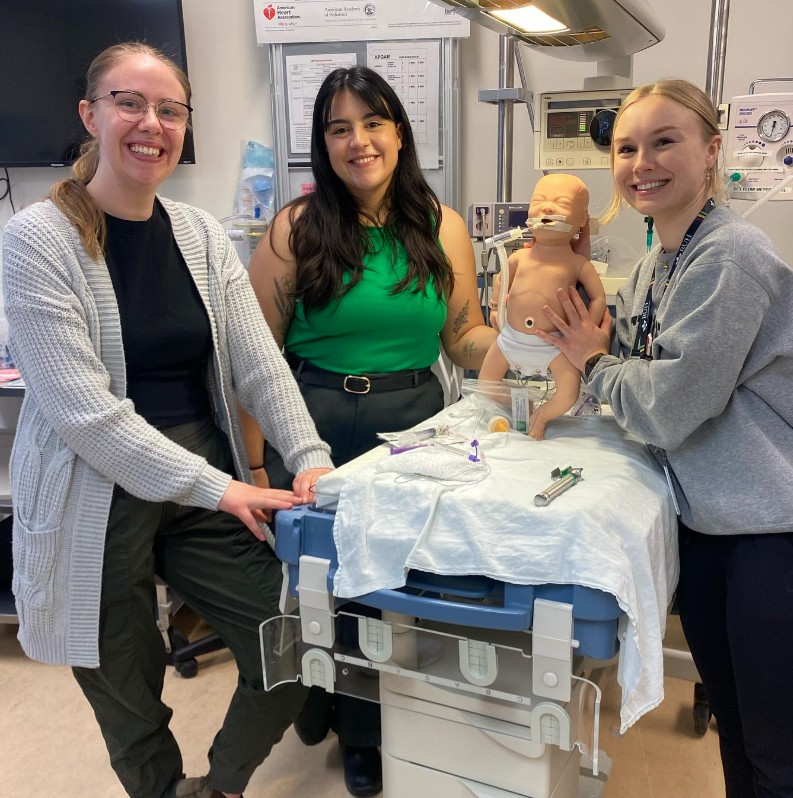
The Undergraduate Medical Education Office (UGME) administers the province’s medical education program, with offices at our main campuses in Saskatoon and Regina, and at our Prince Albert instructional site. Our learners can be found at these and many other teaching sites throughout the province.
Quick Links
- Curriculum, Schedules and Objectives
- Wellness
- Policies and Procedures
- Contacts for MD Students
- Mistreatment, Discrimination and Harassment
- Student Services
- Awards and Funding
- Student Medical Society of Saskatchewan
- UGME Strategic Plan
- Student Records
- Stories from Our Students Blog
- Appreciation Alert
- Beyond the Chart Podcast
- Program Feedback Tool
General Resources for Students

UGME's Student Guides act as a guiding resource for all current MD students. It is recommended that you familiarize yourself with the information. Topics include ethics and professionalism, program evaluation, scholarships and awards and more.
The policies and procedures archive indexes all regulations and guidelines for current MD students. If you have any questions about these policies and procedures, contact information can be found on each page.
Study space is essential. As such, we would like to highlight the spaces UGME has for our MD students. Spaces are located in various locations including the College of Medicine Campuses in Saskatoon and Regina, and the SHA libraries in Saskatoon and Regina. Additional spaces can be found in local hospitals as well. Make sure to regularly view this webpage as we endeavour to add study spaces as they become available.
Student safety and security is a key priority for the College of Medicine. UGME has created a webpage with general information for MD students that outlines safety and security resources and policies ranging from inclement weather to safe walk programs.
MD students have access to three different award streams:
- Continuing Awards
- Scholarships and Bursaries
- Graduation Awards
To qualify for reimbursement from the student travel fund, you must be presenting(ed) a poster or oral presentation on your research.
Undergraduate Medical Education (UGME) is continually developing policies and guidelines around the use of artificial intelligence. These policies and guidelines are made in alignment with the University of Saskatchewan's greater integration and recognition of AI technology. These regulations are for MD students and faculty, and are designed to ensure ethical use.
Feedback from students is part of the UGME’s continuous quality improvement work. Your feedback is valued, and we use feedback submitted through this to tool to identify problems that need to be solved in a timely way, as well as things that are going well.
Pre-Clerkship Resources

Pre-clerkship is your first two years of medical school.
During your first year of pre-clerkship, you will gain a solid basis in preparatory clinical medicine and biomedical sciences, while developing clinical skills.
During your second year of pre-clerkship, you will build on the foundations of clinical medicine, professional and clinical skills. You will participate in flipped classrooms, case-based learning, and develop clinical reasoning skills. Early patient contact is also integrated throughout the program.
Welcome first-year students to the University of Saskatchewan College of Medicine! Before you begin orientation, we ask that you familiarize yourself with a few materials. This includes forms to complete and training courses.
The College of Medicine requires that all students entering the College of Medicine complete and provide documented proof of Standard First Aid with CPR BLS and AED. The College of Medicine only accepts certificates from Canadian providers.
Completion of the CPR BLS and First Aid requirements is the responsibility of the student as well as any associated costs.
University of Saskatchewan Health Sciences students are required to provide proof of immunizations as part of our Clinical Placement Agreement. The University of Saskatchewan requires that all students attending a Health Science College provide documented proof of immunization.
The College of Medicine supports flexible learning and acknowledges diverse student needs. Absences may be approved under specific circumstances, guided by principles of equity, transparency, and confidentiality. Decisions consider the student's well-being, academic responsibilities, and the integrity of the M.D. program.
Shadowing is a self-directed but mandatory experience for University of Saskatchewan MD program pre-clerkship students to observe and explore various aspects of medicine and health care.
Students are encouraged to shadow (observe) physicians from a variety of disciplines and are also encouraged to shadow non-physician health care providers as part of the undergraduate curriculum, in the College of Medicine, University of Saskatchewan.
Students are also encouraged to reflect on their shadowing experiences, and how they relate to the knowledge, skills, and attitudes reflected in the Program Learning Objectives.
The College of Medicine's UGME program uses Examplify from ExamSoft for administering exams. Examplify must be downloaded and installed on the student’s personal laptop and then registered with ExamSoft.
With Examplify installed, the exams and questions are downloaded (from the student’s account) a few days prior to the exam. At the start of the exam, students are provided a password to decrypt the questions and start the exam. Once the exam is completed, the student uploads the answered exam to the server for marking.
Students will be oriented to these procedures during the orientation phase of Year 1.
Clerkship Resources
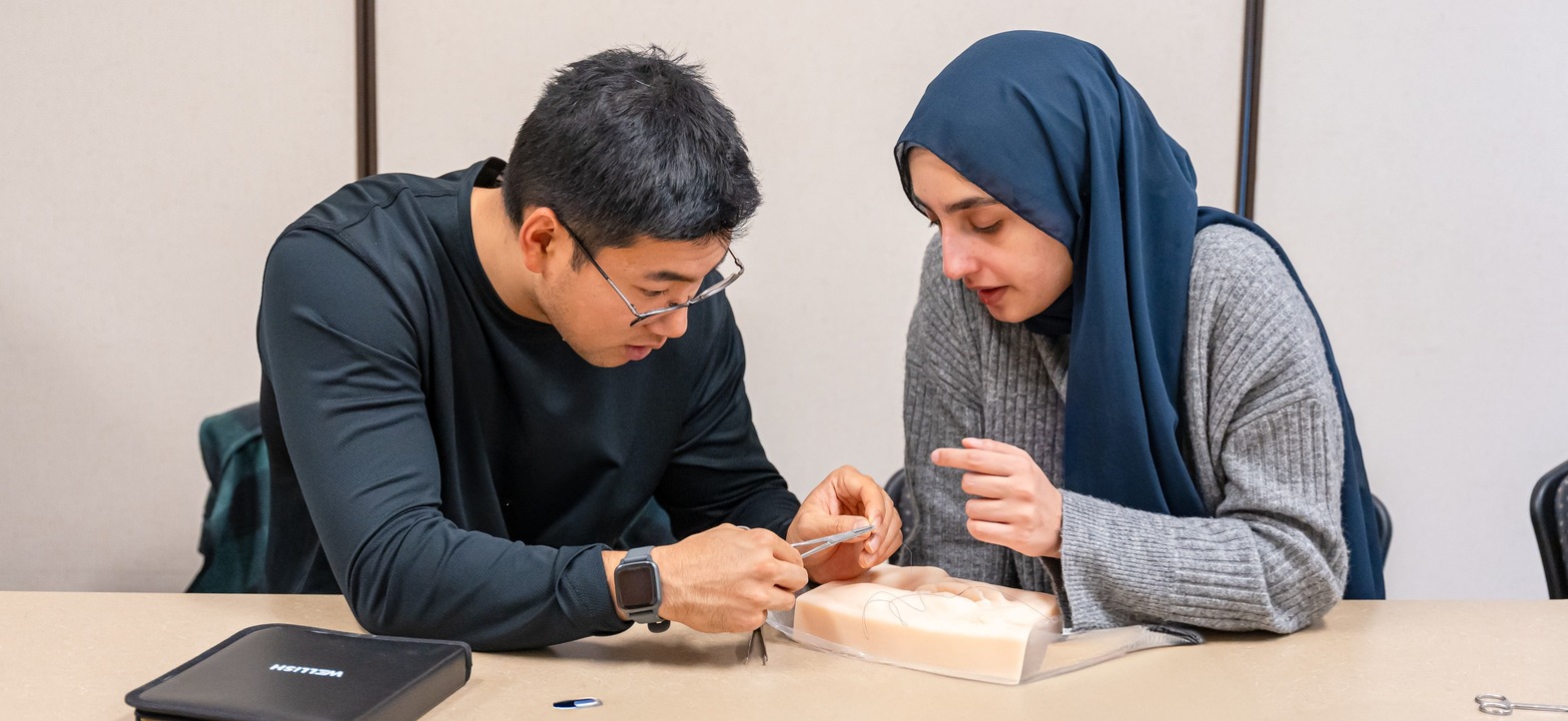
Years 3 and 4 are considered to be your clerkship experience. These clinical experiences are supplemented with seminar-style classes that provide opportunities to apply the knowledge, skills and attitudes students have acquired and use them when interacting with patients in the medical environment. Specific core rotations, electives and selectives are available. In Year 4, students also will prepare for residency, the next phase of training.
Before you begin your orientation to Year 3, we ask that you familiarize yourself with a few materials. This includes forms to complete, key contacts and more.
Elective opportunities supplement required learning experiences, permit medical students to gain exposure to and deepen their understanding of medical specialties and pursue their individual academic interests.
The goal of EPAs is to define regular clinical activities — such as taking a history and performing a physical examination, or formulating and implementing a management plan — that a student would be expected to exhibit competence in prior to graduation and the start of residency training, and to assess and give feedback to learners based on these activities.
The 12 EPAs are to be implemented by all Canadian medical schools to ensure a common frame of reference outlining what residency program directors can expect of an incoming Canadian medical graduate.
Active participation by medical students in learning opportunities is critical to their formation, education, and training. Sustained and deep engagement, which requires regular and punctual attendance, is expected of all students in all of their classes (lectures, laboratories, seminars, tutorials, small groups and clinical sessions).
Absences may be approved under specific circumstances, guided by principles of equity, transparency, and confidentiality. Decisions consider the student's well-being, academic responsibilities, and the integrity of the M.D. program.
The purpose of this policy is to establish standards regarding the number of hours’ medical students participate in clerkship rotations; as well as to specify call and post-call requirements.
The Medical Student Performance Record contains information on a medical student’s standing in program, displays commentary on student performance in core rotations and elective courses, and summarizes a student’s academic progress in program as well as whether their performance meets expectations for professionalism. It provides contextual information on a medical student’s performance that would otherwise be absent on a student’s academic transcript.
MD Verification
The Undergraduate Medical Education Office is responsible for processing requests for MD Verifications. Depending on how in depth the verification request is, the fee may change as well as the length of time to complete, as in depth verification request require that the graduate’s permanent file be pulled from storage.
Clinical Re-orientation
Clinical Re-orientation is a non-mandatory course which will allow students who have had an extended time away from the Undergraduate Medical Education Program for academic, educational or medical reasons an opportunity to participate in clinical sessions in order to refresh clinical skills and reorient to clinical environments prior to returning to the program.
Events and Celebrations
There are three main events that take course over the academic year. These events celebrate milestones and achievements for MD students at the College of Medicine. The Fall Formal and the Graduation Banquet and Awards ceremony are planned alongside volunteer student committees.
Teaching Resources
The UGME Faculty Teaching Resources Toolbox is a self-paced learning hub that offers technical and pedagogical resources to assist faculty in optimizing their teaching practices. Whether you are conducting live sessions for large or small groups, or pre-recording sessions using Panopto, this resource repository will guide you through the software and techniques. It provides an opportunity to stay current with educational technology and enhance your teaching methods
Contacts
The College of Medicine Saskatoon site is located on the University of Saskatchewan campus.


Victoria Hospital acts as the main training site for clerks in Prince Albert. As the third-largest service district in Saskatchewan, the hospital sees a very diverse patient population.
Sites are located in Estevan, La Ronge, Meadow Lake, and Melfort. The SLIC training sites have been selected by their ability to provide learning experiences across a broad medical scope so that students can meet all their training objectives.