
Play, imagine, learn, and stay well
Doctor for a day Classroom Learning Kits spark interest in medicine.
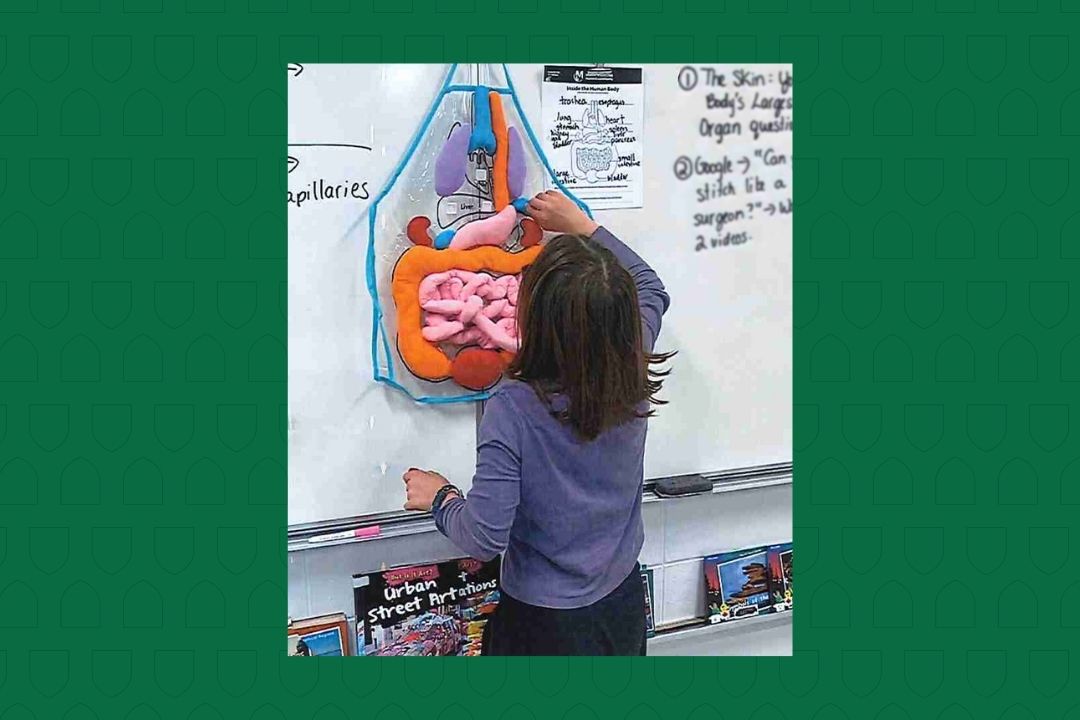
By Kelsey KougiyaIn a classroom in rural Saskatchewan, a group of students gathers around their teacher, eyes wide as she pulls out a white coat. There’s a stethoscope, a wearable apron displaying internal organs, even a suture kit made with felt and thread. The lesson today? What it means to be a doctor.
Designed for students in grades two through five, the kits offered an engaging, hands-on approach to health science education. Each package included lesson plans aligned with the Saskatchewan curriculum and came fully equipped with interactive materials reviewed by physicians and assembled with care by volunteers and members of the Community Advisory Committee.
The learning goals of the project were threefold: to provide fun and accessible in-classroom resources; to spark early interest in medicine as a career path; and to establish a meaningful presence for the College of Medicine within communities of varying size, location, and socioeconomic context.
The kits are designed to build confidence in young learners while helping them see that medicine is not a distant dream. It’s something they can reach for, and belong in.
Each kit included four themed lessons: Inside the Human Body (anatomy and organ placement), The Skin: Your Body’s Largest Organ (featuring a safe suture practice craft), Inspire & Aspire (career exploration and role-play as doctors), and The Medicine Wheel (exploring Indigenous teachings on wellness and balance). With tactile materials, and age-appropriate language, the kits made medical learning both tangible and inclusive.
The response to the pilot was overwhelmingly positive, and far exceeded expectations. Originally designed to support 15 classrooms, the program received 83 applications from 70 schools in 44 different municipalities across Saskatchewan. Recognizing the widespread demand and the potential for impact, the pilot was expanded to deliver 42 classroom kits.
The final cohort represented a wide cross-section of urban, rural, and remote communities across the province, and the feedback that followed was immediate and glowing. Teachers sent in photos, thank-you notes, and reflections on how the kits had transformed their classrooms.
One educator wrote, “Our students felt seen, heard, and capable. This kit made them believe they could be doctors, and that someone out there believes in them beyond their family circle.”
Students, too, shared their excitement. Many pointed to the hands-on activities, especially the stethoscopes and stitching practice, as highlights. Others spoke of their growing interest in becoming nurses, surgeons, or family physicians. Even more moving were the questions students began to ask: “Do doctors need to be good listeners?” “How old do I need to be to be a doctor?”
These moments underscored not only the academic success of the pilot but its emotional and motivational reach. “We wanted to meet kids where they are - curious, imaginative, and open to possibility,” says Kelsey Kougiya, a project creator.
This project isn’t just about learning. It’s about belonging. When students put on that white coat or place an organ on the apron, they start to see themselves differently. The Doctor for a Day Classroom Learning Kits plant seeds that may grow into a calling, or at the very least, a deeper respect for their health and community.
Moving forward, the Alumni and Community Program is looking to transition Doctor for a Day from a pilot into an ongoing and sustainable program. The Community Advisory Program will continue to fundraise for project support, and plans are underway to expand the number of kits available, ensuring that schools in all corners of the province continue to feel included and supported. While future enhancements such as bilingual materials or multimedia content may eventually be considered, the current focus remains on preserving the integrity and accessibility of the original concept.
None of this would have been possible without the generosity of alumni and donors. Funding for the pilot project came from the Alumni and Community Fund as well as proceeds from the Pulse Path Fundraiser held during the 2024 Highlights in Medicine Banquet. These donor contributions directly translated into meaningful classroom experiences and, potentially, life-changing moments for students across Saskatchewan.
Because of your support, these young students were able to imagine futures they hadn’t considered before. They learned about the body, about wellness, about community, and about themselves. That is the kind of impact we as the College of Medicine community can all be proud of.