
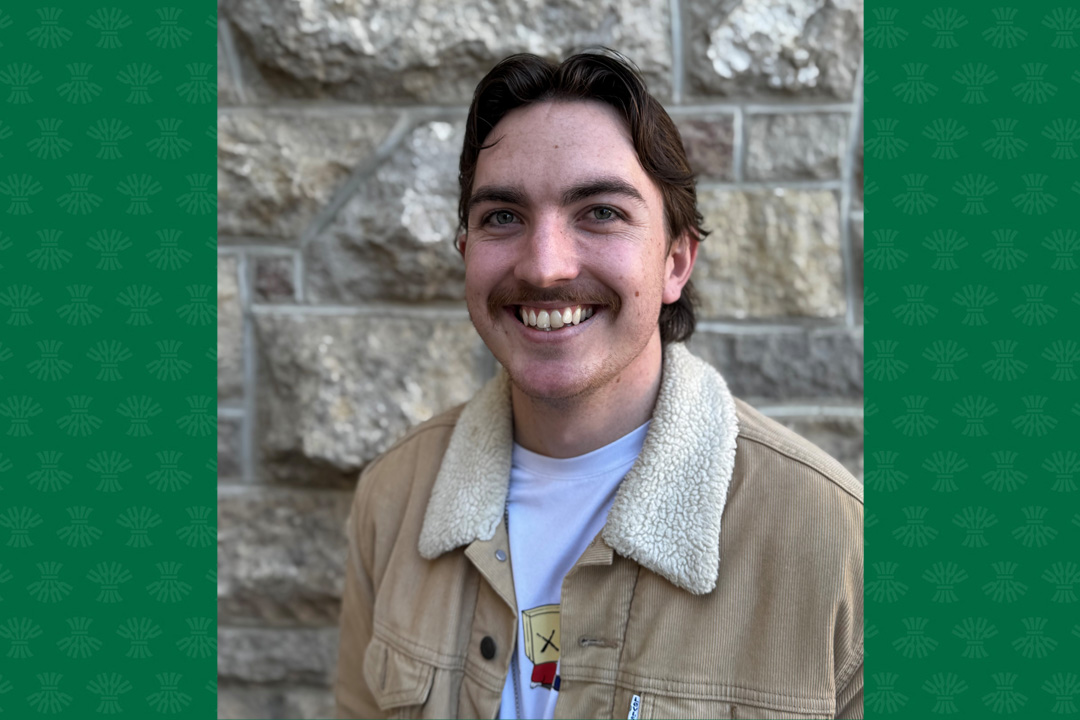
Cross-linked clues: Jack Walther on depression and Alzheimer's
As a student, Jack Walther's friends often came to him when they needed a listening ear, or help with relationship struggles.
By Jen Quesnel for RESEARCHERS UNDER THE SCOPE
Researchers Under the Scope is produced by the Office of the Vice-Dean Research in the College of Medicine.
This summer, Walther took his fascination with the brain and mood disorders to Dr. Darrell Mousseau's psychiatry laboratory, learning to untangle some of the tiny molecular threads that might explain why depression so often shows up alongside dementia.
The undergraduate student and Mousseau's research team dug into the physical interactions between serotonin and the beta amyloid peptides that build up in patients with Alzheimer's disease.
Walther admits going from the classroom to the laboratory felt like a sharp learning curve.
"It was totally different," he said. "It's daunting once you get onto it, but once you get going, it makes a lot more sense and you feel way more comfortable."
Using human embryonic kidney cells, Walther and lab staff used cross-linking chemicals to literally 'catch' proteins interacting.
In this episode, Walther recalls the day Mousseau hustled into the lab, results in hand.
"I could see the excitement in his face and it just kind of made the lab buzz a little," said Walther. "We found there is actually some kind of physical interaction between these beta amyloids and the serotonin receptor."
Mousseau's laboratory is narrowing down biochemical events common to depression and Alzheimer's disease, looking for modifiable targets in the depressed brain that could slow or delay the onset of the neurodegenerative disorder.
Walther said being part of that laboratory work felt 'incredible'.
"I want to bring some good into this world," he said. "I would like to focus on people that struggle to help themselves. Whether that's neurodegenerative or it's people that are just stuck in place and don't know what to do."
He aims to earn his honours degree in neuroscience, then keep pressing on.
"Whichever way that takes me, that's when I'll be happy with what I've accomplished," Walther said.
(Runs: 14:36)