
USask HIV Research Inspires New York Fashion Week Garment
USask researcher Dr. Linda Chelico’s HIV research showcased on New York Fashion Week runway.
By Aiden RydeTypically, laboratory research and runway fashion seem worlds apart, but for Dr. Linda Chelico (PhD), vice dean of research, biomedical sciences at the University of Saskatchewan (USask) College of Medicine, these two worlds collided via runway fashion through HIV Unwrapped.
A global campaign organized by the Canadian Foundation for AIDS Research (CANFAR), HIV Unwrapped pairs leading HIV scientists with emerging fashion designers and advocates. Their goal is to unite fashion, science, and storytelling to confront HIV stigma, humanize complex research, and reignite a cultural conversation.
Chelico was selected as one of 10 researchers across Canada invited to participate in this initiative and worked alongside fashion designer Jina Kim to transform her research into a striking garment, which was worn on the runway during the New York Fashion Week HIV Unwrapped show.
For Chelico, the invitation to participate offered a compelling way to bridge academic research with the public.
"I was very excited when CANFAR reached out," said Chelico. "I feel that discovery research often happens in the background of the mainstream media and can sometimes be difficult to understand. The idea of transforming discovery research into something very tangible, like a physical garment that displays the scientific idea, was fascinating to me."
She added that beyond the creative challenge, it offered a valuable platform with a good cause to bring awareness to people living with HIV.
Chelico’s lab studies how human antiviral proteins attempt to fight off the virus, and how an HIV protein known as Vif tries to disable those defenses.
Translating those microscopic interactions into wearable art required explaining complex protein structures to a creative collaborator outside the scientific community.
"In my mind I am constantly visualizing how the proteins we study are working and interacting together," Chelico noted. "It was the first time I explained my inner science thoughts and visuals to another person, and she brought them to life."
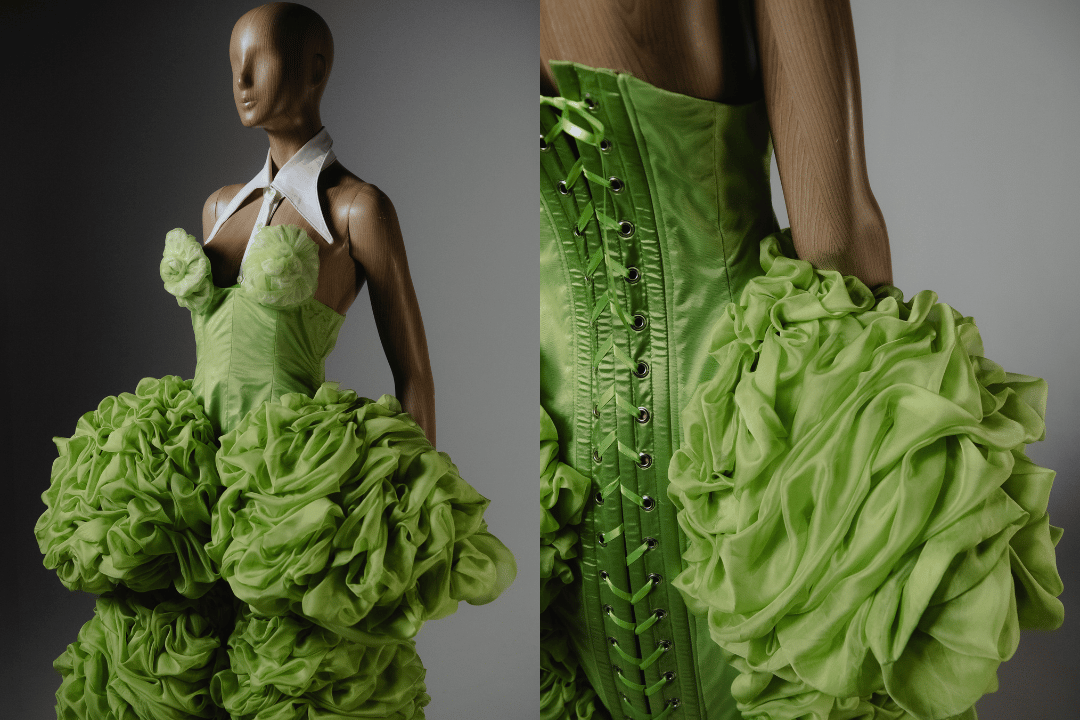
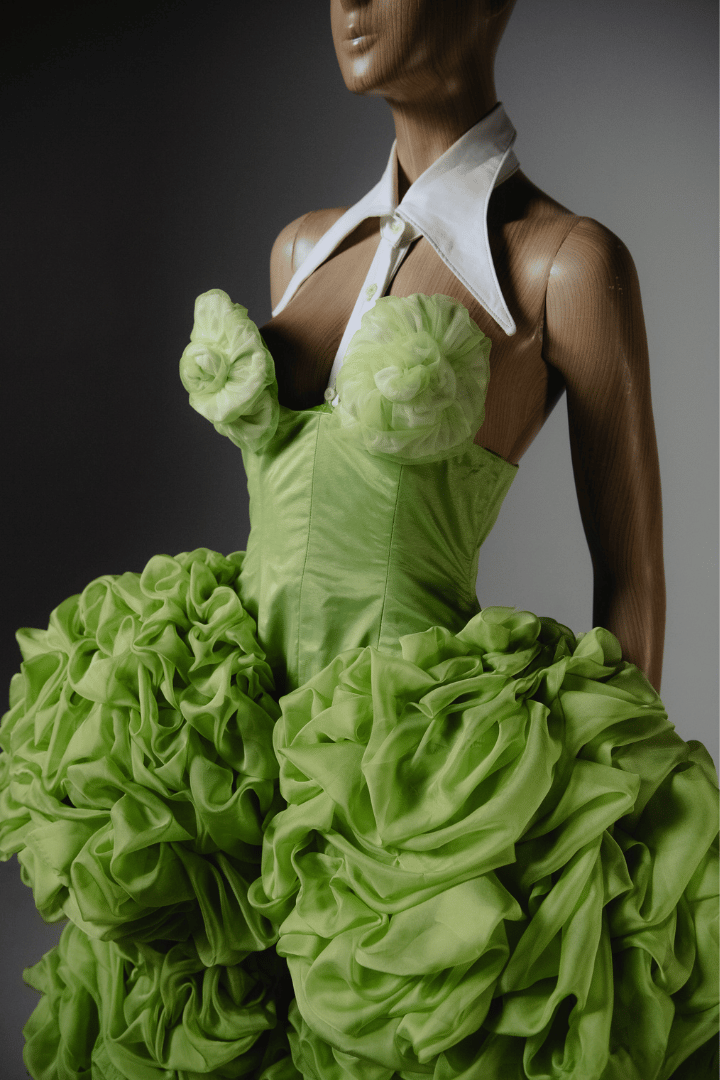
The resulting garment uses colour, texture, and structure to tell that scientific story in physical form.
"The fluorescent yellow-green represents the human protein brightening and returning to its original function as it recovers," said Kim. "The sculptural rounded forms reference complex protein structures, while the gathered and twisted fabric is inspired by alpha helices found throughout Linda’s research."
When Chelico saw the completed piece for the first time, she was struck by how accurately Kim had translated their conversations.
"I was amazed at the 3-D nature of the garment and that it so perfectly represented the scientific discussion between Jina and me; and at the same time was elegant and stylish."
Although Chelico had previously engaged with broad audiences through formats like her TEDxUniversityofSaskatchewan talk, explaining the visualization of cellular proteins for a fashion piece offered a completely unique experience.
"This was something different," Chelico reflected. "This was explaining the visualization of proteins in cells to a non-scientist. It was a very unique experience, one that not many scientists get!"
The collaboration proved so inspiring that it has left a lasting impression on her approach to public engagement, prompting her to look ahead to new creative intersections at USask: "It was an amazing experience and has really made me interested in organizing an artist in residence program for the biomedical sciences!"