

Red Dress Day 2026: Honouring MMIWG2S+ Through Art, Awareness, and Action
National Red Dress Day honours missing and murdered Indigenous women, girls, and two-spirit people across Canada. This year, the Department of Family Medicine partnered with IMSAS to raise awareness and support families through a collaborative t-shirt initiative.
By Spencer BomboirOn Red Dress Day, a single red dress carries weight. Hanging in a doorway, draped over a railing, or printed across a t-shirt, it holds the shape of someone who should still be here.
National Red Dress Day, observed annually on May 5, honours missing and murdered Indigenous women, girls, and two-spirit people across Canada. The day began in 2010, inspired by Métis artist Jamie Black, who hung red dresses across Winnipeg to give voice to those who no longer had one. Since then, Red Dress Day has grown into a national act of remembrance, resistance, and community care.
This year, the Department of Family Medicine partnered with the Indigenous Medical Student Association of Saskatchewan (IMSAS) to raise awareness and direct proceeds from a t-shirt initiative toward Saskatoon Interval House and Regina Transition House, two organizations that provide safe shelter and support services to women and children escaping domestic violence. The t-shirt features original artwork by USask medical students Rebecca Seifried and Terri Thunder, who also designed last year’s shirt through the College of Medicine. Read more about the artists and artwork here.

A design rooted in culture and care
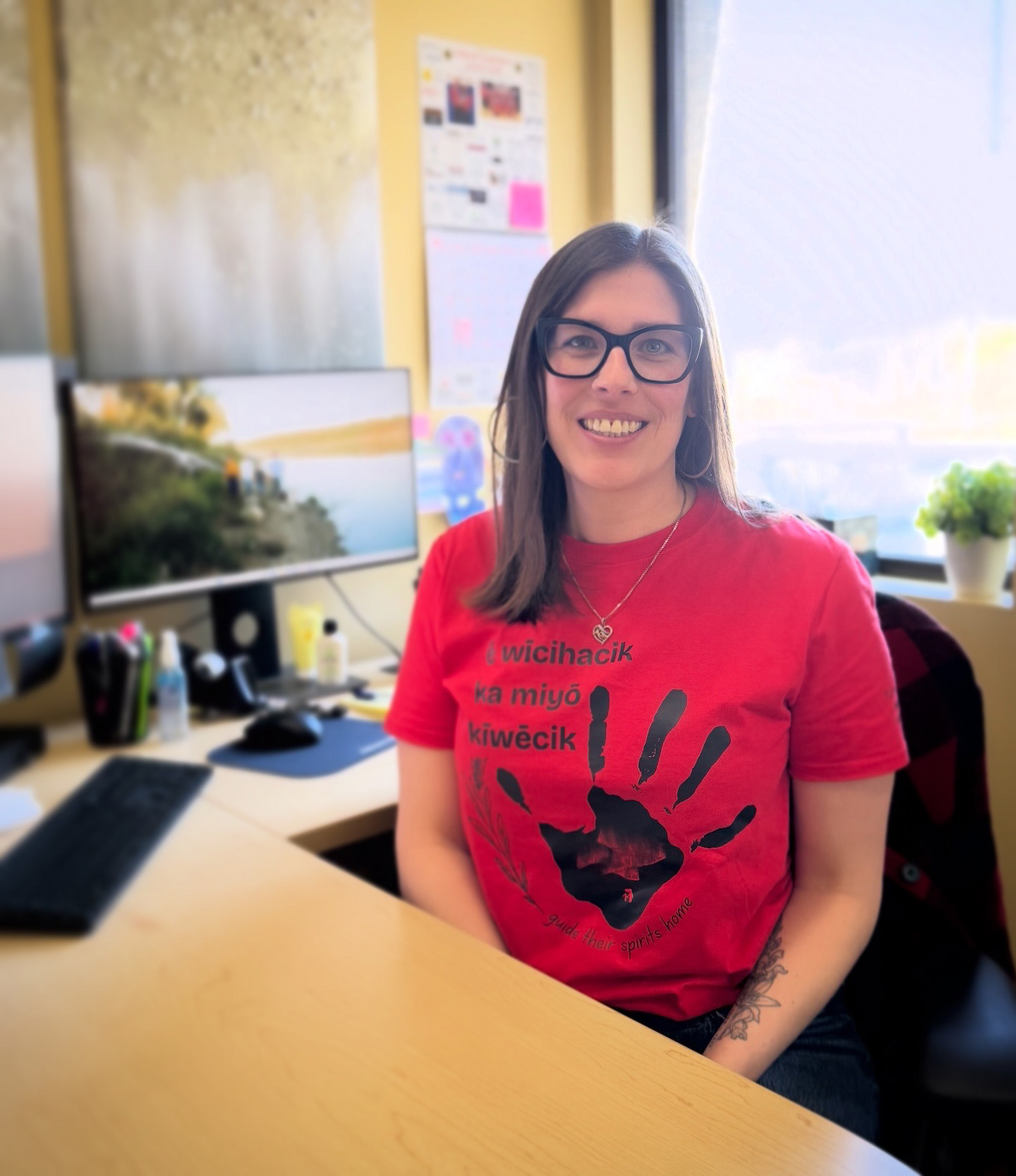
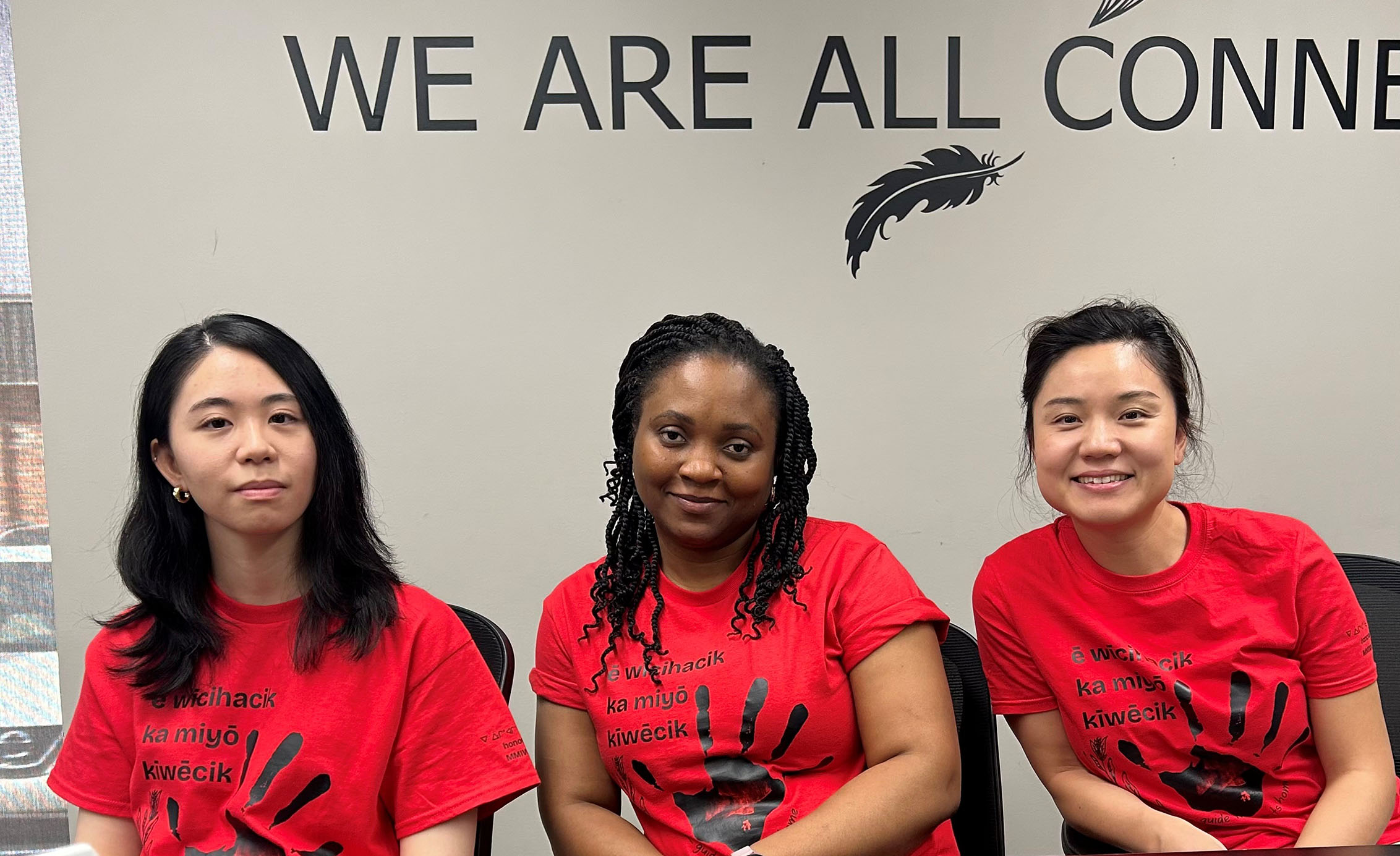
The shirt’s central image is a handprint, one of the most recognizable symbols of the MMIWG2S+ movement. But the design goes further than awareness. It carries hope.
Inside the handprint are the northern lights and two figures holding hands, an adult and a child. For Thunder, a third-year medical student from Thunderchild First Nation, the northern lights represent the spirits of deceased loved ones round dancing in the sky. The two figures symbolize the passing of teachings and worldviews to younger generations. The design honours those who have been lost while also acknowledging that they are safe with their ancestors now.
The handprint itself is Seifried’s own, painted by hand and pressed to the canvas. Seifried, a second-year medical student and a member of the Gakijiwanong Anishinaabe Nation (formerly Lac La Croix First Nation) in Ontario, translated Thunder’s vision into the final artwork. The design also features buffalo sage, symbolizing a connection to the land where ceremonies and lodges are held.
Woven into the design is a phrase in nehiyawewin (the Cree language): ē wīcihacik ka miyō kīwēcik, which translates to “guide the spirits home.” The phrase comes from the Ghost Dance lodge, a nighttime ceremony where families share traditional foods and dance with the spirits of loved ones who have passed. Thunder drew inspiration from her mom’s role as a lodge keeper for the Ghost Dance.
Why this work matters
For Thunder, the initiative grew from a feeling that there was more that could be done as medical students to contribute. Growing up on Thunderchild First Nation, she learned early about the disproportionate violence faced by Indigenous women, children, and two-spirit people. She lost her own aunt when she was ten years old.
That personal experience drives the work. The handprint on the shirt is not a generic symbol. It is a call to action, and a reminder that the people it represents are not statistics. They are family members, community members, and loved ones.
Strength and remembrance
Red Dress Day asks something simple of all of us: to pay attention. To remember. To act.
Through their design, Thunder and Seifried have created something that does all three. It honours those who are missing. It draws from the strength of language, ceremony, and teaching. And it directs resources to organizations doing the difficult, necessary work of supporting families in crisis.
“Hope and strength,” both Thunder and Seifried have said, are the messages at the heart of the design. The shirt carries both.